
We’re excited to share an important milestone for the Lipedema Foundation Biobank: onboarding of the first surgical collection site.
Launched in 2025, the LF Biobank is a foundational initiative designed to accelerate research into the causes, diagnosis, and treatment of Lipedema. By securely collecting biospecimens such as blood, urine, saliva, adipose, and other tissue types, along with relevant health information, the Biobank provides researchers with high-quality, well-annotated samples needed to advance scientific discovery.
Introducing our First Surgical Biobank Site: Pasadena Plastic Surgery (Pasadena, CA)
Pasadena Plastic Surgery, led by Dr. Michael Schwartz, now serves as an official LF Biobank collection site, expanding access to high-quality samples for research. Dr. Michael Schwartz is a board-certified facial plastic and cosmetic surgeon with more than 20 years of experience. In support of our efforts to expand the LF Biobank, Surgical Coordinator Cristina Corral and the Pasadena Plastic Surgery team lead on-site collection of biological samples and clinical data from individuals who choose to participate. Cristina, who lives with Lipedema, has supported patients undergoing liposuction to treat Lipedema at Pasadena Plastic Surgery for 10 years and actively raises awareness by sharing her personal journey.
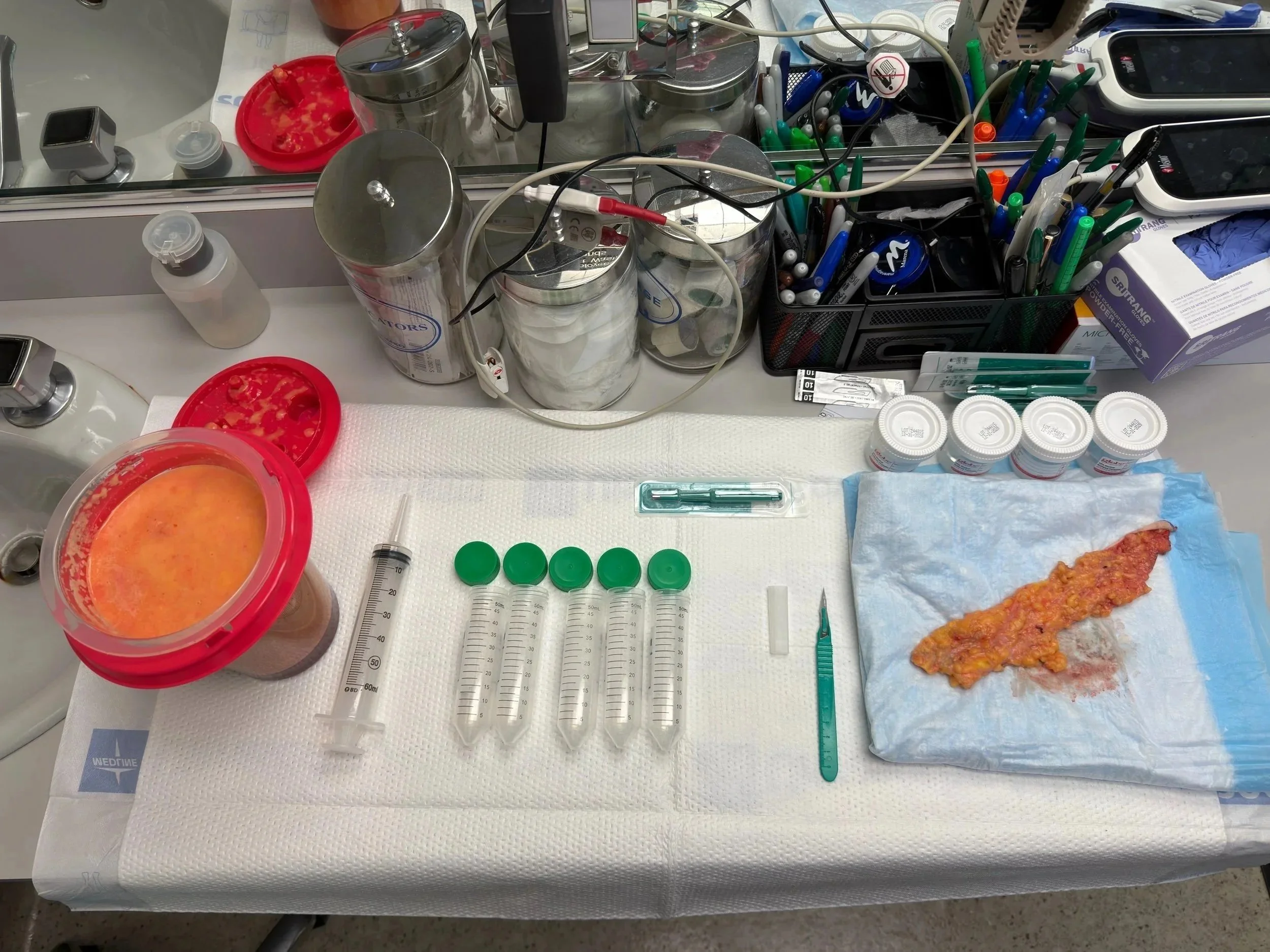
The participation of this site increases the availability of critical materials needed to study disease biology. The team collects samples and data from both affected and unaffected participants, including tissue that would otherwise be discarded during standard procedures. By preserving these materials, the site supports more comprehensive and comparative research.
One unexpected benefit of the collection day was greater insight into the appearance of Lipedema-affected fat. Cristina showed LF staff a piece of excised skin and pointed out the Lipedema nodules directly. They were visible, tangible, and unmistakably distinct from healthy tissue. It is one thing to read about the physical markers of this condition — it is another to see them plainly in front of you.
“Patient-submitted samples like these are critical to research progress... direct analysis of affected tissues is essential to understand the local biological mechanisms driving the disease.”
During the first collection, the team secured several sample types:
Lipoaspirate
Punch biopsy samples
Adipose tissue
Participant-submitted samples like these are critical to research progress. While blood samples provide insight into systemic processes, direct analysis of affected tissues is essential to understand the local biological mechanisms driving the disease.
Participants in the biobank also undergo a standardized research examination and provide detailed self-reported information regarding their symptoms, medical history, medications, quality of life, and more. It is the integration of high-quality biospecimens with comprehensive clinical data that makes this resource especially powerful for advancing the understanding of Lipedema.
Each sample contributes to a growing resource that supports scientific discovery. While some of these live, freshly excised tissue or lipoaspirate samples will be shared directly with approved, qualified researchers, some will also be stored in the Lipedema Foundation Biobank to have as a resource for future research.
This approach integrates sample collection into routine procedures, increasing participation and expanding the volume of usable data. The resulting dataset linking biology to real-life symptoms supports efforts to clarify disease biology and inform more effective treatments.
Could your clinic be our next biobank site?
Help us move research forward. If your practice regularly sees, diagnoses, and cares for people with Lipedema, your site can contribute to the LF Biobank. Saliva, blood, and clinical data are immensely valuable; sites doing surgical procedures can also contribute lipoaspirate and biopsies. Collection integrates flexibly with your routine practice, is well supported by our team, and runs under our IRB-approved protocol. To learn more about participating as a site, contact biobank@lipedema.org.
Are you a researcher interested in samples for your next study?
Researchers can visit lipedema.org/sample-resources to view Lipedema sample availability in the Lipedema Foundation and other biobanks. To request access to samples, please reach out to biobank@lipedema.org.