
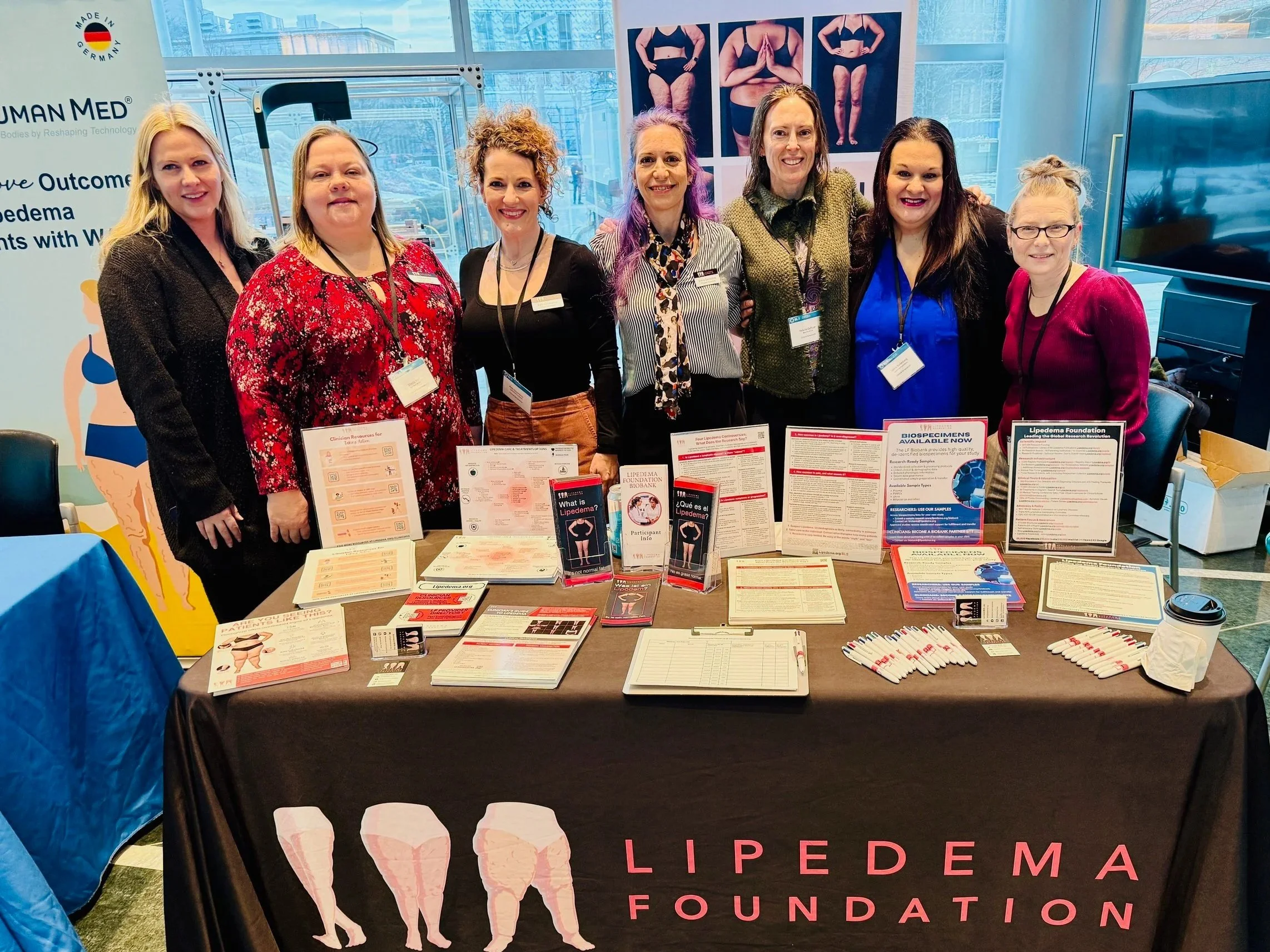
Lipedema Foundation exhibited at BLS 2026, connecting with participants and providing our newest resources.
Lipedema Foundation was proud to participate in this year’s Boston Lymphatics Symposium, centered on the theme “A Focus on Lipedema: Bridging Gaps”. The meeting brought together global leaders in lymphatic research, clinicians, patient advocates, and industry partners for meaningful dialogue around one of the most pressing and complex fat disorders.
Several LF-funded researchers presented their work during the conference, highlighting ongoing progress across multiple areas of Lipedema research. Additionally, six members of LF’s Scientific Advisory Board participated in the symposium, contributing their expertise to panels, discussions, and scientific exchange.
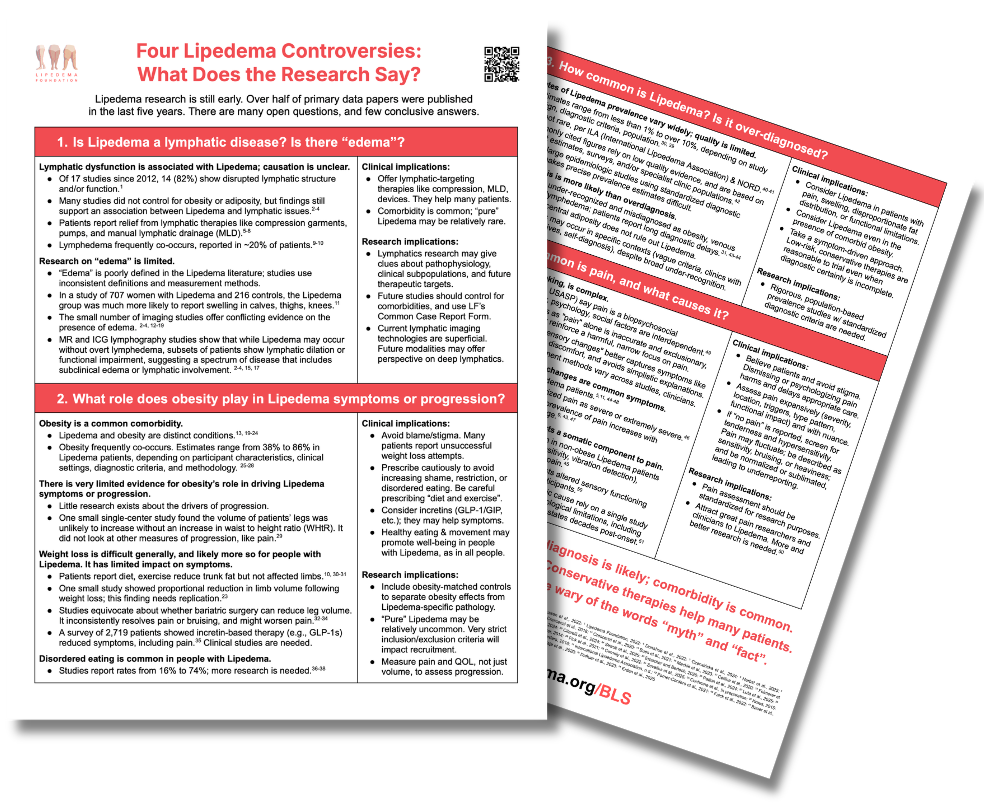
In Lipedema, there are meaningful differences in clinical interpretation, particularly around: lymphatics, obesity, prevalence, and pain.
Our concise, research-based summary that outlines what the current evidence says and where important questions remain.
LF also introduced a new resource addressing four areas of ongoing controversy in Lipedema: lymphatic involvement, the role of obesity, prevalence, and pain. The summary outlines the current evidence, where uncertainty remains, and why greater standardization and additional research are essential. It is available to view here.
From panel discussions and new resource launches, to biobank expansion and cross-disciplinary collaboration, LF’s presence reflected our commitment to strengthening the research foundation for Lipedema worldwide.
We extend our sincere thanks to the Boston Lymphatics Symposium Center Chairs and the entire planning team for selecting Lipedema as this years’ focus and for hosting a well-executed, thoughtful, and impactful conference.
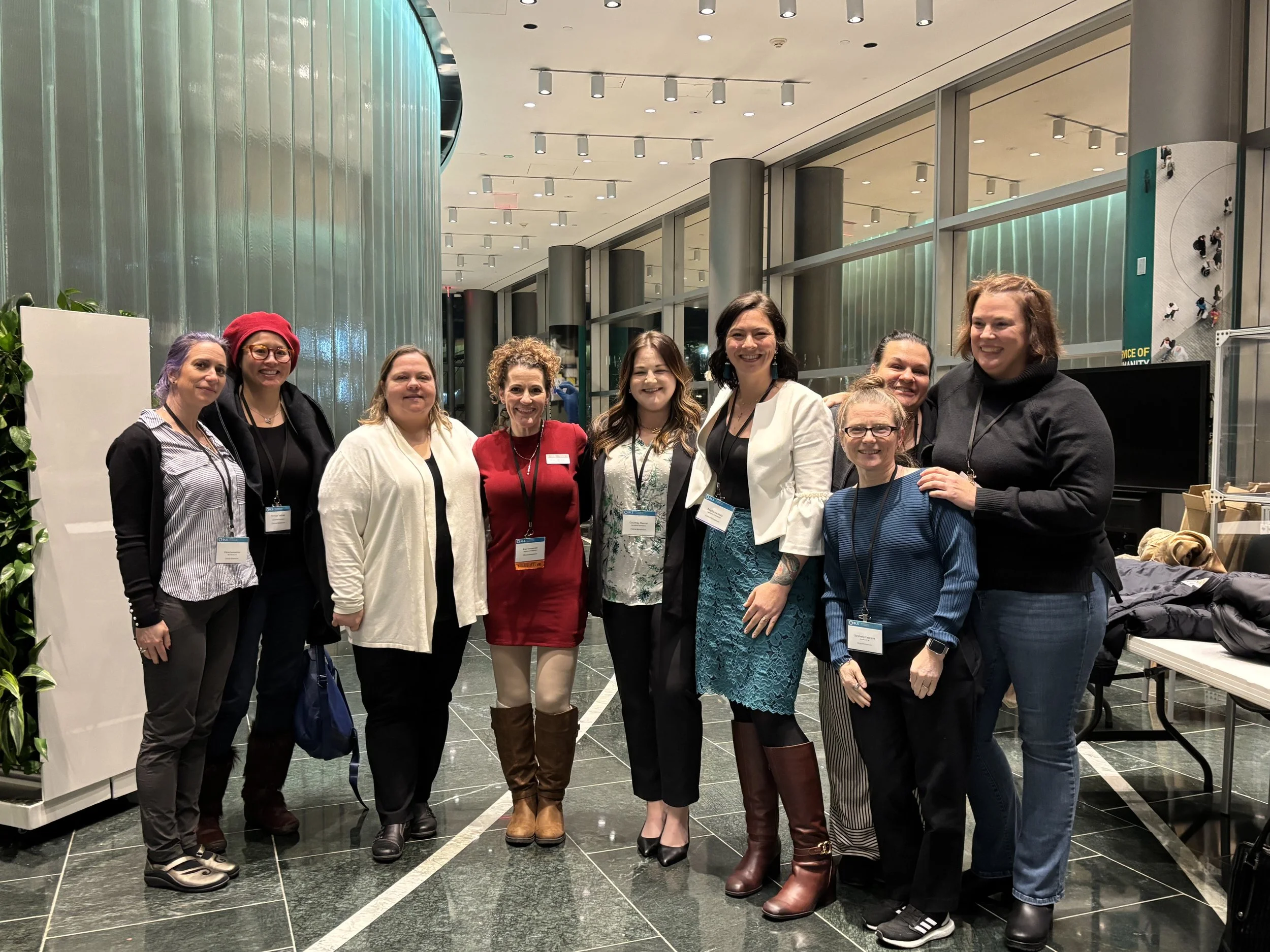
Members of the Lipedema Foundation team at 2026 Boston Lymphatics Symposium
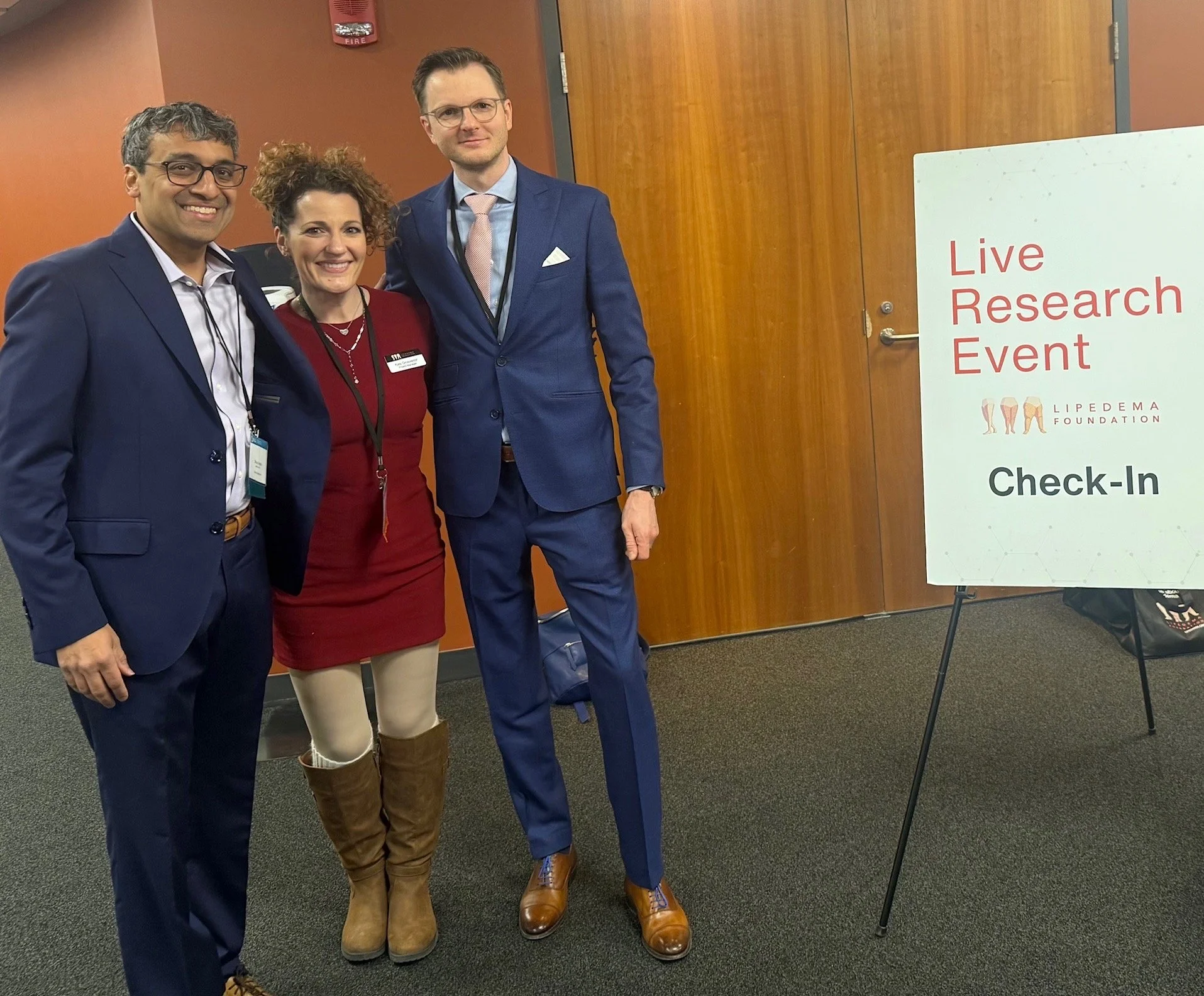
BLS Chair Dhruv Singhal, MD, and Scientific Program Chair Philipp Kruppa, MD joined LF’s Project Manager Kasi Grosvenor to check out the LF Live Research Event, the first event of its kind to occur at Boston Lymphatics Symposium.
Research Priorities: Strengthening the Foundation for Lipedema Science
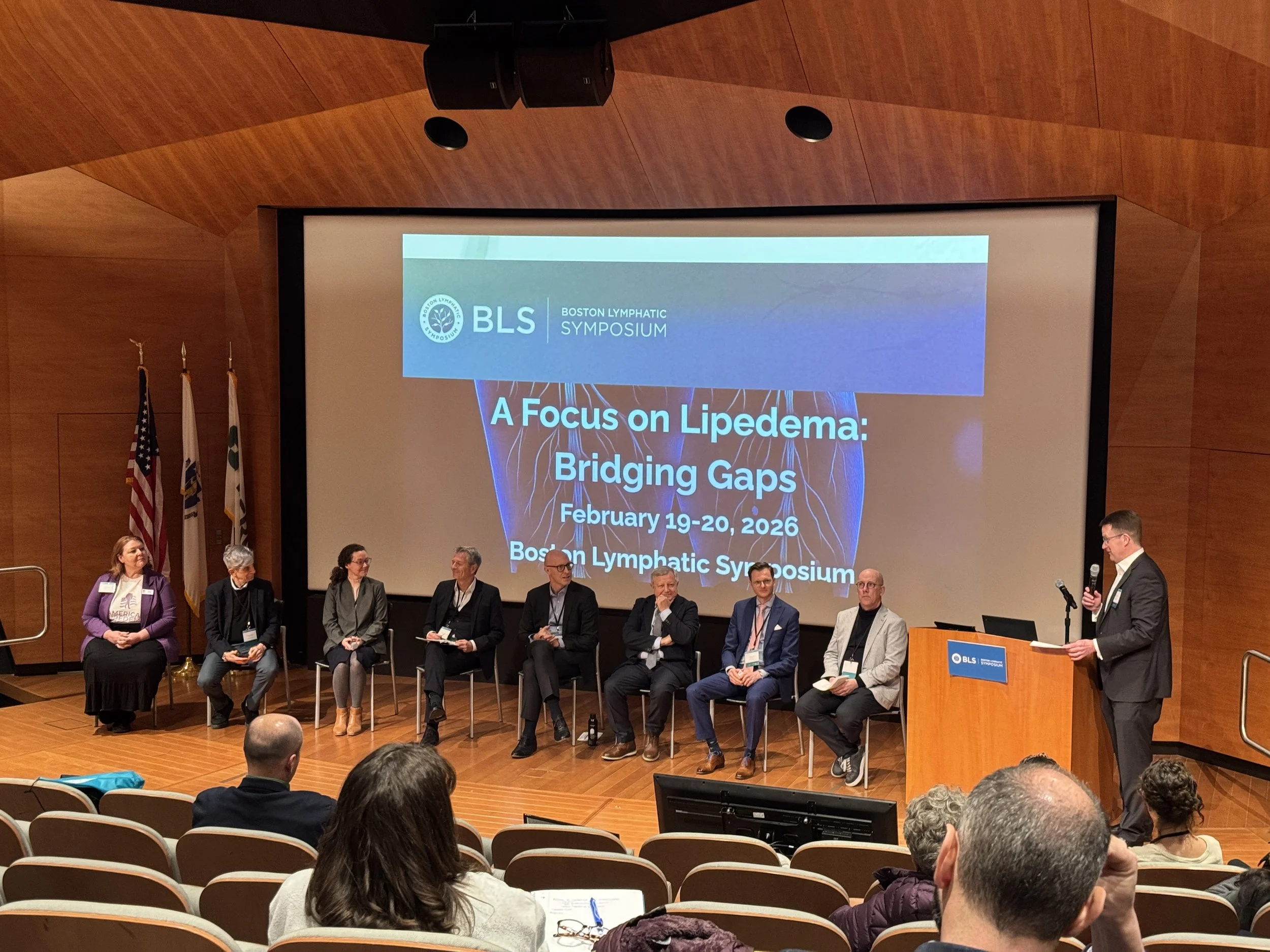
LF CEO Jonathan Kartt spoke on research priorities on the panel “Care for Lipedema Around the World” at Boston Lymphatics Symposium 2026.
During the panel discussion, “Care for Lipedema Around the World”, LF CEO Jonathan Kartt outlined three critical research priorities necessary to move the field forward in a coordinated and evidence-driven way.
1. Adopting a Common Case Report Form (CCRF)
Most Lipedema studies are small, and recruitment remains challenging. Variability in how data are collected and reported limits comparability across studies and slows progress. Adopting a Common Case Report Form (CCRF) is essential to generating higher quality, more comparable research and enabling meaningful meta-analyses. More consistent data will help researchers interpret findings across studies and make progress on key unanswered questions.
Through broad international collaboration, LF has published a working version of a CCRF which includes an extensive framework with a Core Common Dataset focused on diagnosis. Adoption of even the Core criteria would significantly improve the field’s ability to compare participant cohorts across studies. Learn more here.
2. Aligning on Research Diagnosis and Study Criteria
Beyond standardizing data collection, the field must address the lack of consensus around diagnosis and study inclusion and exclusion criteria. Kartt emphasized the distinction between clinical diagnosis and research diagnosis. Research diagnosis requires defining cohorts using appropriate trade-offs in sensitivity and specificity based on the study question, meaning definitions may reasonably vary.
Rather than forcing a single universal definition, developing a shared research framework for inclusion and exclusion criteria could provide stability for studies over the next several years. Greater alignment would improve comparability across trials and strengthen overall evidence, even as clinical practice continues to evolve.
3. Advancing Clinical Studies on GLP-1 and Related Therapies
Patients have reported improvements in Lipedema-specific symptoms while taking GLP-1 and GLP/GIP dual agonist medications. A survey led by Lipedema Foundation with 2,800 participants showed improvements in validated global health measures and reductions in symptoms such as pain. However, survey findings are not a substitute for controlled clinical trials.
Engaging pharmaceutical and biotech companies to conduct formal studies is a crucial next step. With many of these therapies already in development pipelines, there is both scientific and commercial opportunity. Industry participation could accelerate rigorous trials, regulatory pathways, and broader clinical education, helping translate patient-reported experiences into high-quality evidence.
By strengthening infrastructure, aligning definitions, and engaging industry partners, the field can accelerate the transition from unanswered questions to actionable evidence.
LF Biobank Expands through Onsite Collection Event
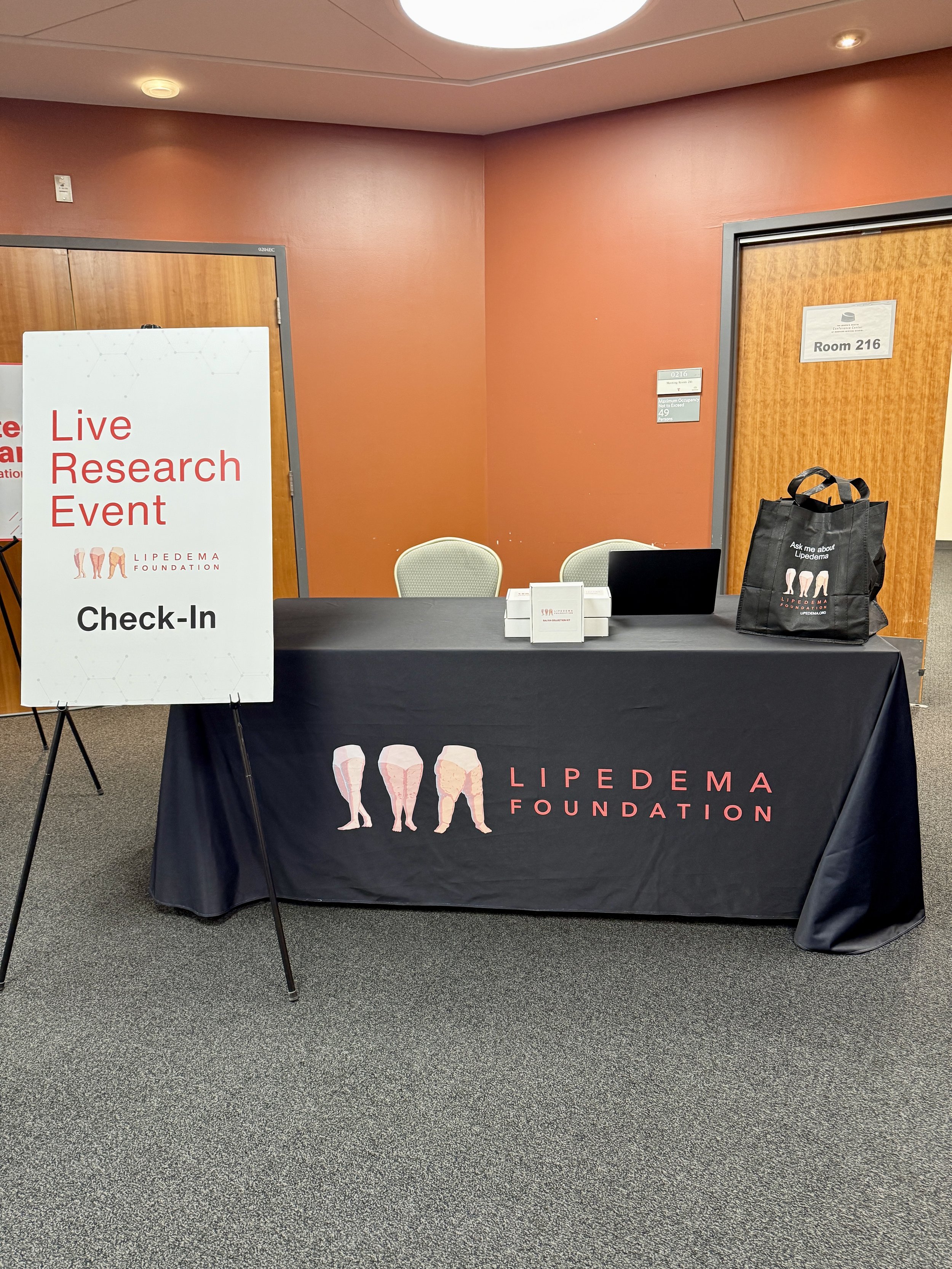
Check-in table featuring Lipedema Foundation materials and participant welcome bags at the Biobank collection event.
The symposium also provided an opportunity to expand the Lipedema Foundation Biobank. During our on-site collection event, we welcomed 18 new participants who completed saliva donation, participant data collection, and a research examination.
We are deeply grateful to each individual who contributed. Participation in the Biobank is a meaningful act of partnership in advancing scientific understanding.
Learn more about the Biobank here.
LF also exhibited at the conference, engaging in valuable networking and collaboration with global leaders across research, clinical care, and advocacy. These conversations are essential to bridging gaps, not only in scientific knowledge, but in care delivery and global coordination.
The Boston Lymphatics Symposium underscored both how far the field has come and how much work remains. Bridging gaps in Lipedema requires collaboration, shared standards, and a collective commitment to building stronger evidence. We are grateful to have been part of this important gathering and look forward to continuing this work together.
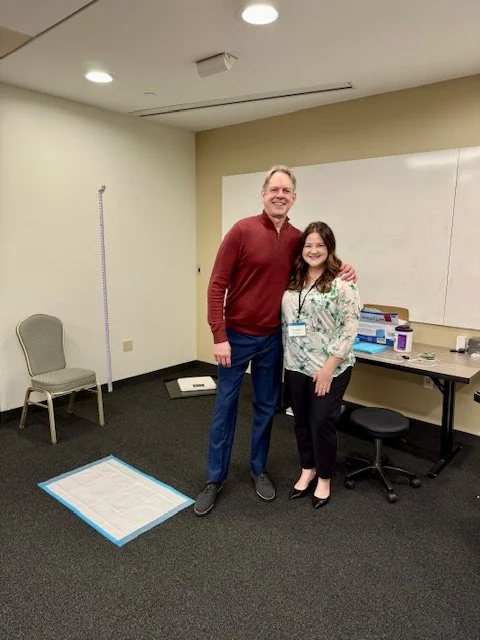
Dr. Steven Dean, with LF’s Courtney Mascio conducted the research examination for Biobank participants.
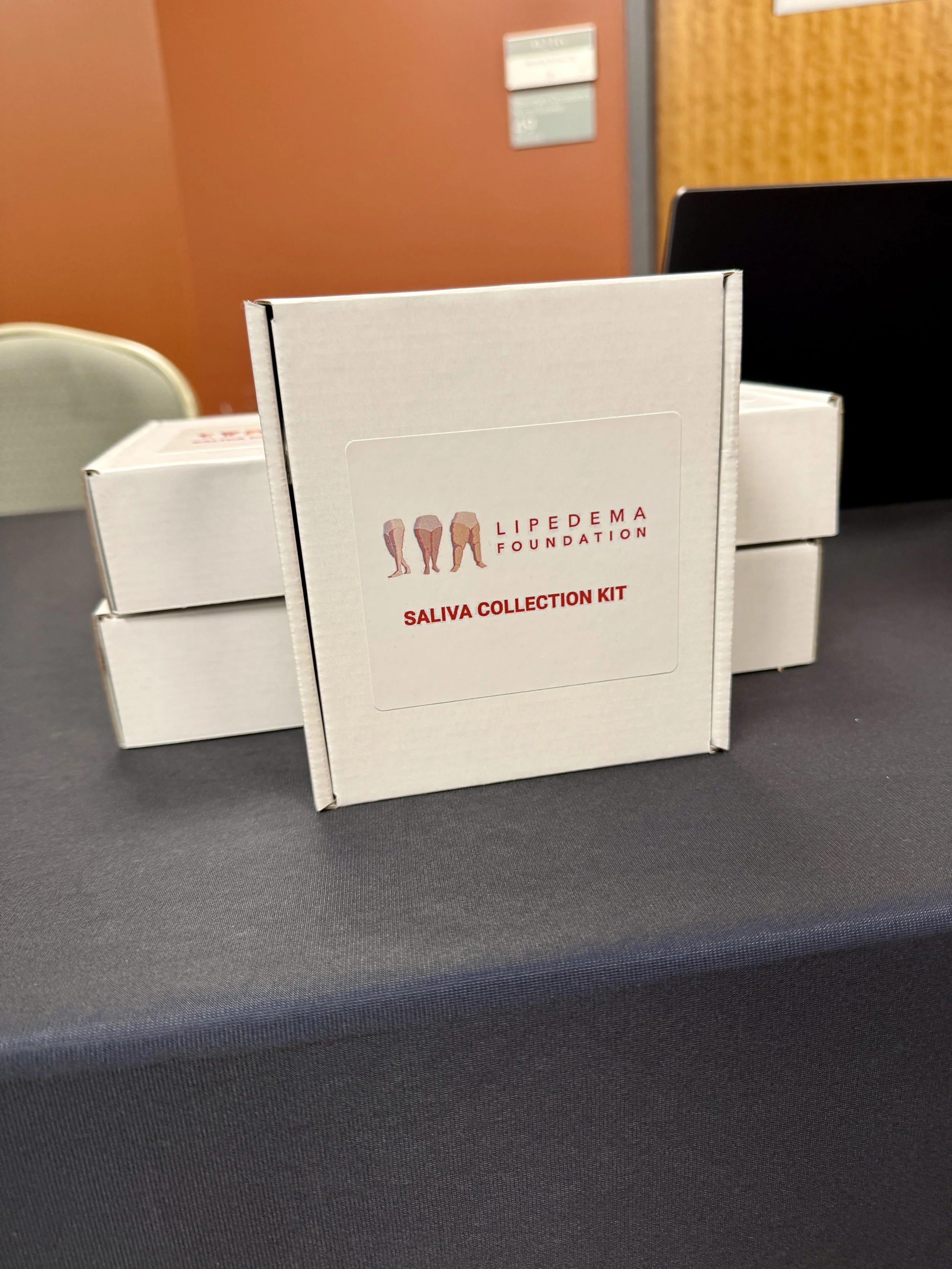
Biobank saliva collection kit used to gather participant samples for advancing Lipedema research.
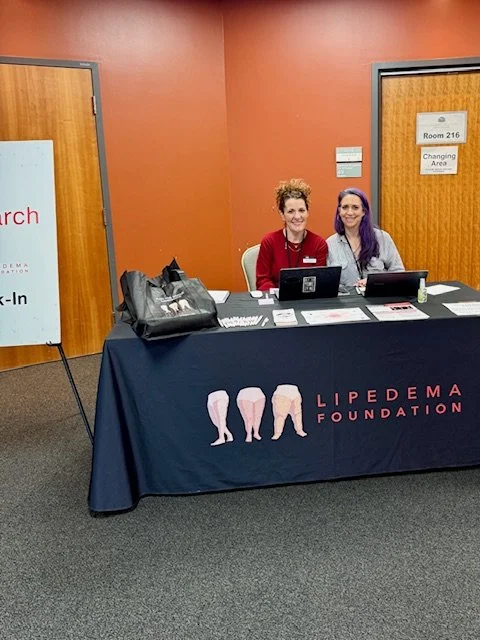
Kasi Grosvenor and Elena Samouhos greet participants at the Live Research Event
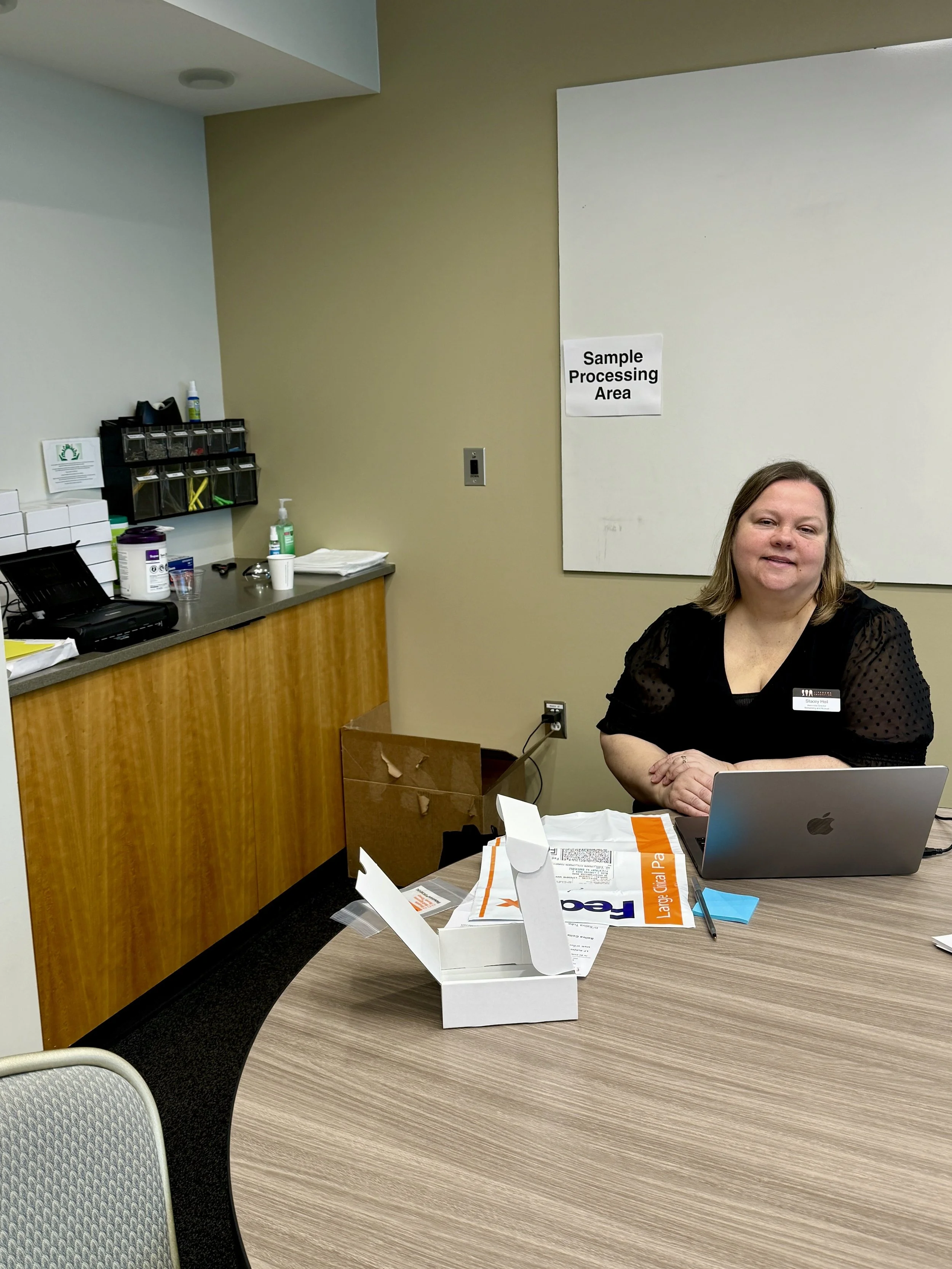
Stacey Heil, LF Associate Director of Biobanking processes samples at the Live Research event.