
Lipedema is a chronic medical condition, often with pain, that is frequently misdiagnosed or mistaken for other conditions, including generalized obesity, lymphedema, and commonly cellulite. It is a question we hear frequently from patients, clinicians, and the public: is this cellulite, or something more? While the superficial appearance of Lipedema may resemble the characteristic dimpling of skin seen in cellulite, they are distinct. Here is what the research shows, and why accurate diagnosis matters.
What Is Cellulite
Cellulite is a cosmetic condition characterized by painless, surface-level dimpling of the skin (Gabriel et al., 2023). It occurs when fat pushes up against the connective tissue beneath the skin (Cellulite, 2021; Rosenbaum et al., 1998).
Compared to Lipedema, cellulite is far more recognized around the world. The term first appeared in French beauty circles during the 1920s and 1930s and was introduced to the United States in the 1960s, when Vogue magazine published an article titled “Cellulite: The new word for Fat You Couldn’t Lose Before” (Miller, 2018; Vogue, 1968). Since then, discussions about cellulite and how to address it have become a recurring theme in popular culture.
Although comprehensive data on prevalence and incidence are limited, it is estimated that between 80% and 90% of post-pubescent women are affected by cellulite (Davis et al., 2019; Arora et al., 2022). Because the superficial appearance of Lipedema can resemble cellulite, individuals with Lipedema are often misdiagnosed or dismissed, leading to misunderstanding and indifference toward their condition (read patient stories here).
How Cellulite Forms
The outermost skin layer (epidermis) and the underlying muscle can be imagined as the ceiling and floor of a building connected and supported by multiple pillars, known as fascia. Layers of fascia also run through the building dividing it into stories. Fat cells, nerves, hair follicles, and blood capillaries occupy the space between the layers of fascia.
The dimpling develops when fat cells expand and push upward. This expansion creates tension between the upward pressure of the fat cells and the downward pull of the fascia that connects the skin to the muscles (Gabriel et al., 2023).
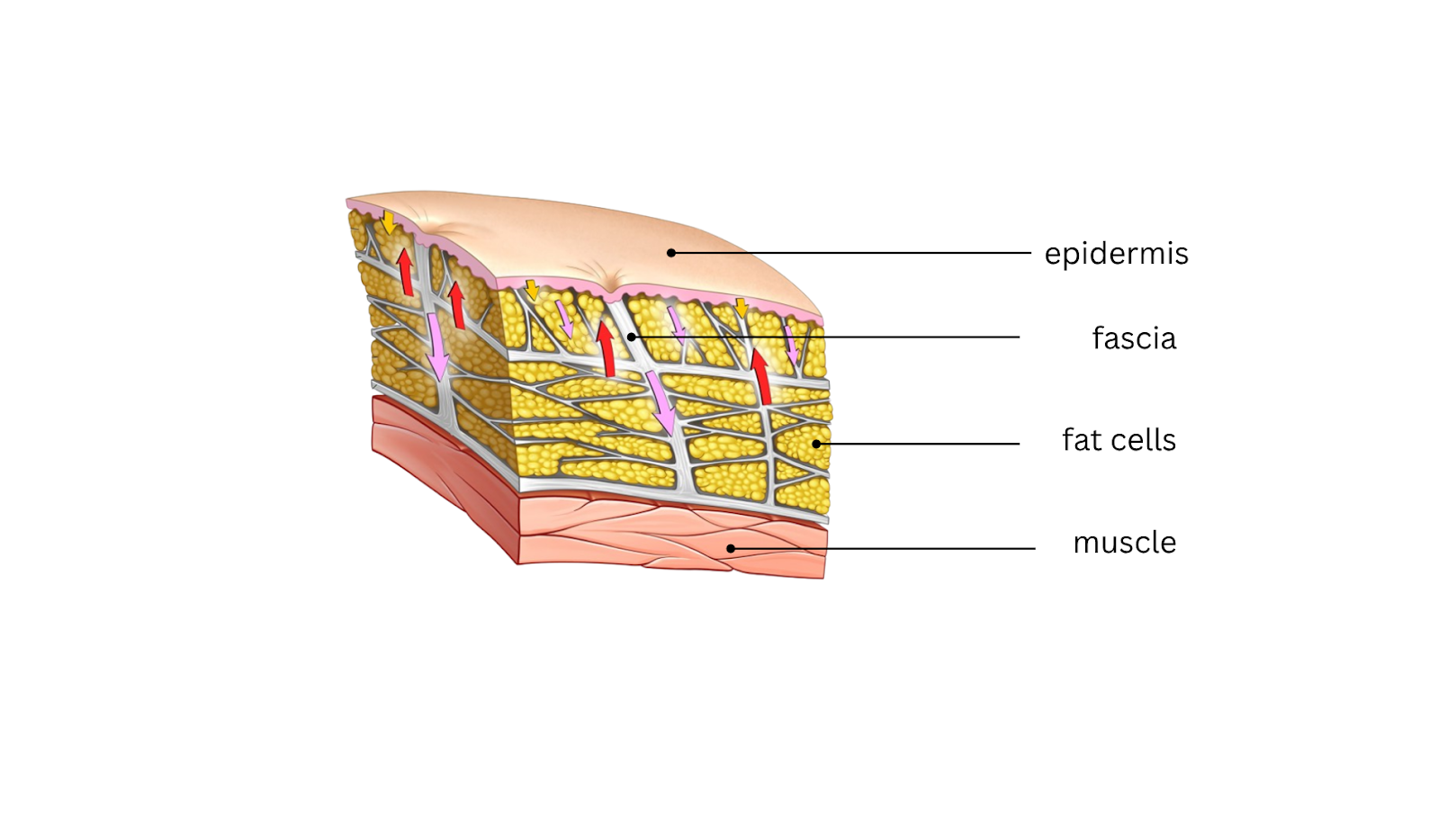
Normal skin structure with layers of fascia surrounding fat cells.
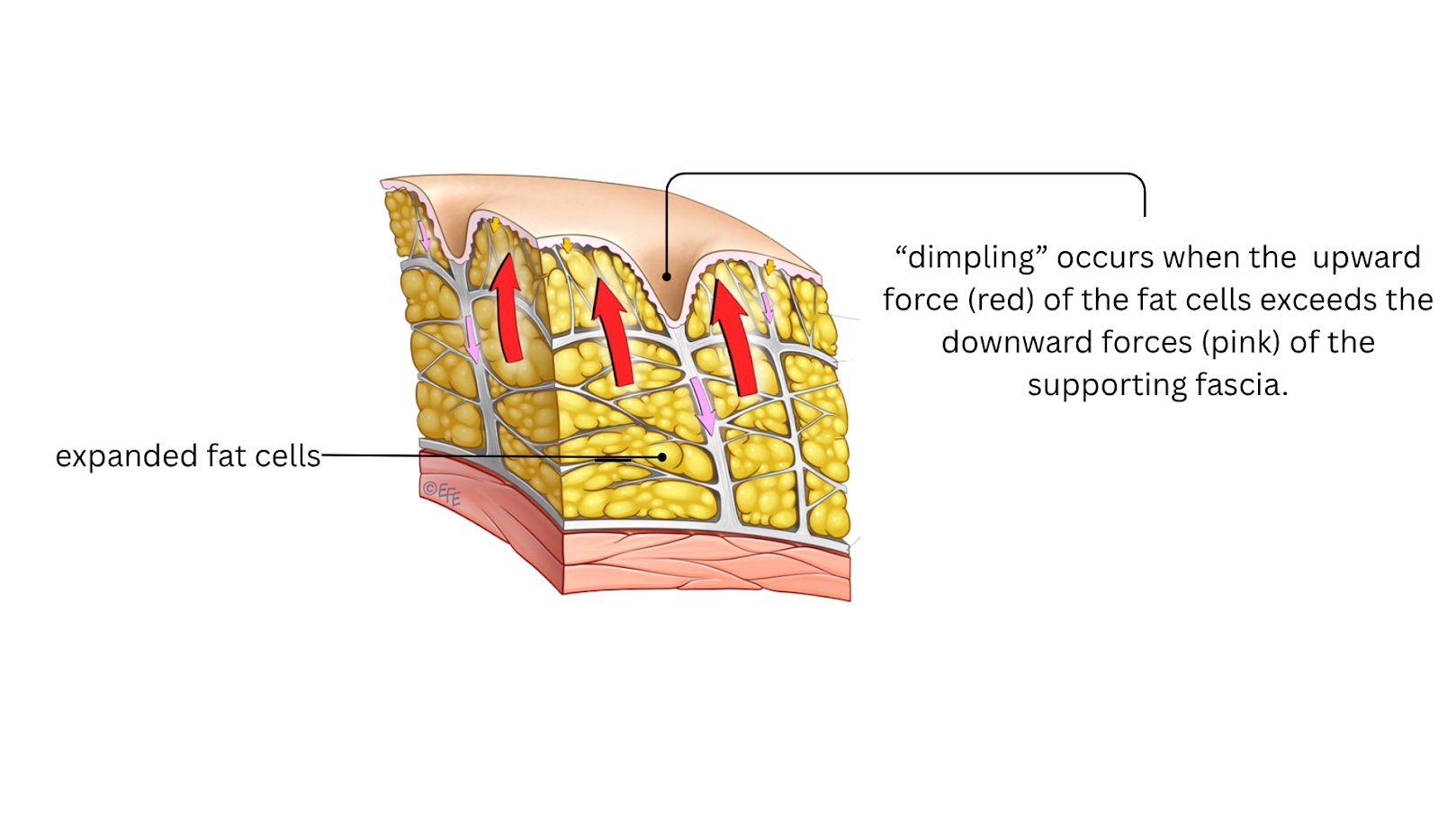
Dimpling occurs when enlarged fat cells push upward while fascia pulls the skin downward.
Differentiating and Diagnosing Lipedema Versus Cellulite
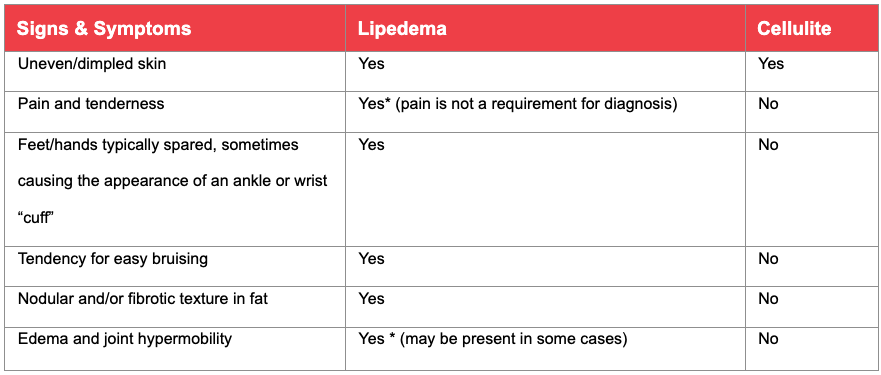
The uneven, dimpled appearance of the skin is common in both cellulite and Lipedema. However, Lipedema is not a cosmetic condition and is accompanied by a wide range of symptoms, listed in the table below. There are currently no standardized diagnostic tests or biomarkers for Lipedema, so clinicians rely on a combination of patient history and physical examination (Diagnosing Lipedema, n.d.).
A key difference between Lipedema and cellulite is the nature of the fat. Lipedema involves painful, often nodular or fibrotic, abnormal fat that falls into distinct stages, characteristics absent in cellulite (Herbst et al., 2021) . Furthermore, the distribution of fat differs. Lipedema typically presents with symmetrical fat deposits in the lower extremities and, in some cases, the arms and lower trunk (hips, buttocks, and abdomen), but spares the feet and hands. In contrast, cellulite usually appears on the thighs, buttocks, and hips and can be asymmetric (Allen & Hines, 1940; Herbst et al., 2021) .
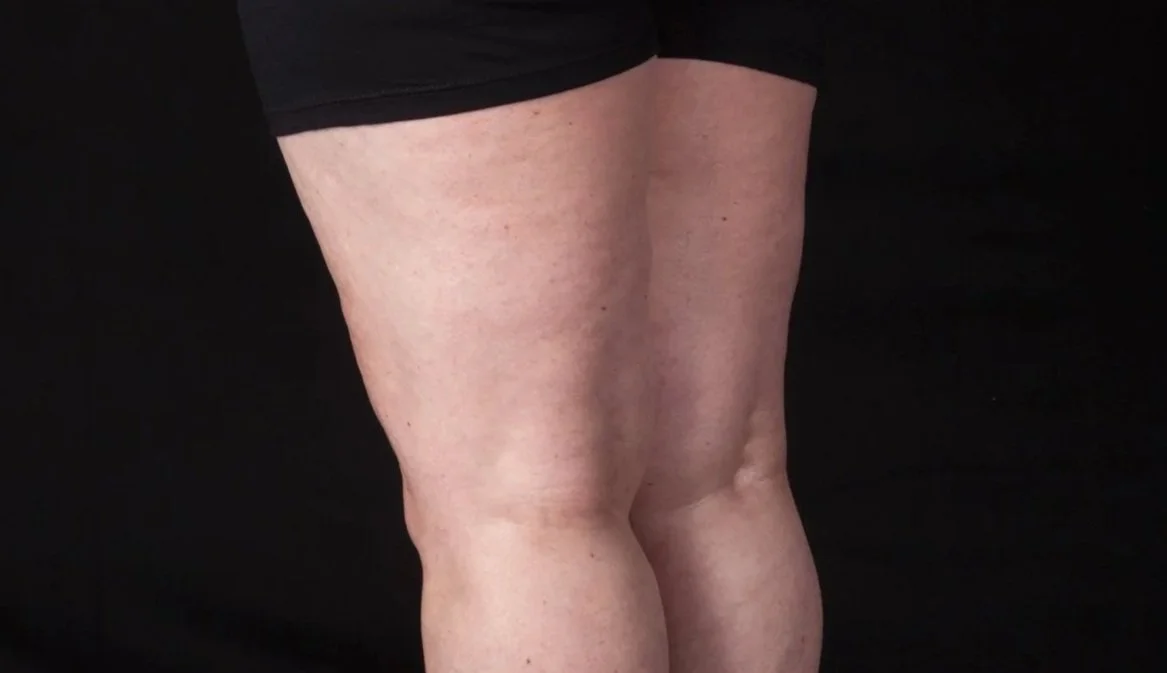
As shown here, cellulite and Lipedema may look similar on visual inspection. Accurate diagnosis of Lipedema relies on clinical assessment (including palpation of the tissue) combined with patient history and associated symptoms.
The table below provides a non-comprehensive comparison of diagnostic criteria for Lipedema and cellulite. Read Lipedema Foundation’s Clinician’s Guide to Lipedema here for more information on diagnosis. LF-funded research has also identified tissue-level differences, including altered gene expression, increased macrophage infiltration, and vascular changes in Lipedema fat that are absent in cellulite.
Can You Have Both Lipedema and Cellulite?
Yes. Lipedema involves abnormal fat accumulation, and this fat can protrude into the dermis, producing the dimpled appearance of cellulite. However, having cellulite does not mean a person has Lipedema; they are two different conditions with very different impact on patients.
Interestingly, Kruglikov and Scherer have proposed that cellulite and Lipedema may share underlying biological processes in gluteofemoral white adipose tissue (gfWAT), driven by selective accumulation of bacterial endotoxin (LPS) that triggers low-grade inflammation (“Pathophysiology of cellulite: Possible involvement of selective endotoxemia,” Obesity Reviews, 2022; “Is the endotoxin-complement cascade the major driver in lipedema?” Trends in Endocrinology & Metabolism, 2024). Scherer, a former Lipedema Foundation research awardee and member of LF’s Scientific Advisory Committee, has even hypothesized that cellulite and Lipedema might represent consecutive stages of the same process in gfWAT. Though they might share some biological processes, it’s clear that they are different conditions requiring different diagnostic and therapeutic approaches.
Self-advocacy is critical for raising awareness and improving care. We encourage patients and healthcare providers to look more closely when what they think might be cellulite appears alongside pain, swelling, or disproportionate fat - it might be Lipedema. If you think you may have Lipedema, or know someone who might, our Patient Self- Advocacy Guide can help facilitate informed discussions with medical professionals.
Understanding the Difference Matters
Recognizing the distinction between cellulite and Lipedema is an important step toward improving awareness, diagnosis, and treatment. While cellulite is a common cosmetic condition, Lipedema is a chronic disease that needs evidence-based care, including appropriate diagnosis and treatment, alongside understanding and empathy from a patient's care team and support systems. The Lipedema Foundation is actively working to sharpen these distinctions through funded pathophysiology research, the Lipedema Foundation Registry, and clinical resources like the Clinician’s Guide to Lipedema. If you or someone you know may have Lipedema, start with our Patient Self-Advocacy Guide and consider joining the Registry to contribute to the research that will improve diagnosis for everyone.
Cited References
Allen, E., & Hines, E. (1940). Lipedema of the legs: A syndrome characterized by fat legs and orthostatic edema. Proc Staff Meet Mayo Clin, 15, 184–187.
Arora, G., Patil, A., Hooshanginezhad, Z., Fritz, K., Salavastru, C., Kassir, M., Goldman, M. P., Gold, M. H., Adatto, M., Grabbe, S., & Goldust, M. (2022). Cellulite: Presentation and management. Journal of Cosmetic Dermatology, 21(4), 1393–1401. https://doi.org/10.1111/jocd.14815
Cellulite: What It Is, Causes, Location & Treatment. (2021, October 28). Cleveland Clinic. https://my.clevelandclinic.org/health/diseases/17694-cellulite
Davis, D. S., Boen, M., & Fabi, S. G. (2019). Cellulite: Patient Selection and Combination Treatments for Optimal Results-A Review and Our Experience. Dermatologic Surgery: Official Publication for American Society for Dermatologic Surgery [et Al.], 45(9), 1171–1184. https://doi.org/10.1097/DSS.0000000000001776
Diagnosing Lipedema: Symptoms, Criteria & Evaluation – Lipedema Foundation. (n.d.). Lipedema Foundation. Retrieved November 6, 2025, from https://www.lipedema.org/diagnosing-lipedema
Gabriel, A., Chan, V., Caldarella, M., Wayne, T., & O’Rorke, E. (2023). Cellulite: Current Understanding and Treatment. Aesthetic Surgery Journal. Open Forum, 5, ojad050. https://doi.org/10.1093/asjof/ojad050
Herbst, K. L., Kahn, L. A., Iker, E., Ehrlich, C., Wright, T., McHutchison, L., Schwartz, J., Sleigh, M., Donahue, P. M., Lisson, K. H., Faris, T., Miller, J., Lontok, E., Schwartz, M. S., Dean, S. M., Bartholomew, J. R., Armour, P., Correa-Perez, M., Pennings, N., … Larson, E. (2021). Standard of care for lipedema in the United States. Phlebology, 02683555211015887. https://journals.sagepub.com/doi/10.1177/02683555211015887
Miller, K. (2018, May 14). Cellulite Isn’t Real. This Is How It Was Invented. Refinery 29. https://www.refinery29.com/en-us/what-is-cellulite-definition-fat-shaming-history
Rosenbaum, M., Prieto, V., Hellmer, J., Boschmann, M., Krueger, J., Leibel, R. L., & Ship, A. G. (1998). An Exploratory Investigation of the Morphology and Biochemistry of Cellulite. Plastic and Reconstructive Surgery, 101(7), 1934.
Vogue. (1968, April 15). Cellulite, the New Word for Fat You Couldn’t Lose Before [Vogue]. Vogue | The Complete Archive. https://archive.vogue.com/article/1968/4/cellulite-the-new-word-for-fat-you-couldnt-lose-before